


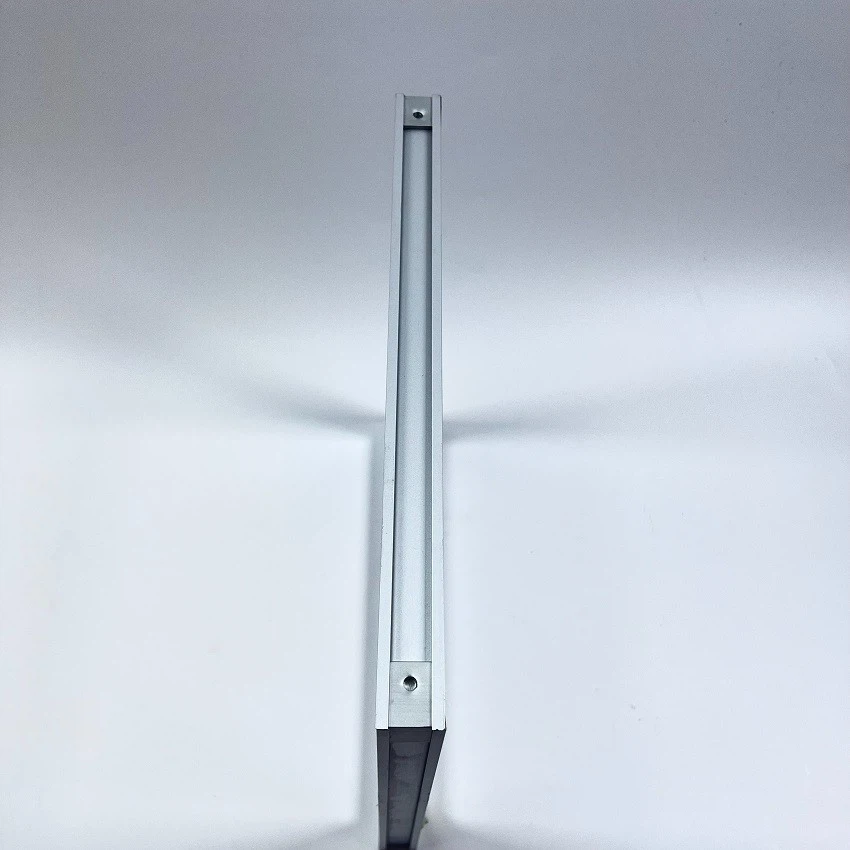


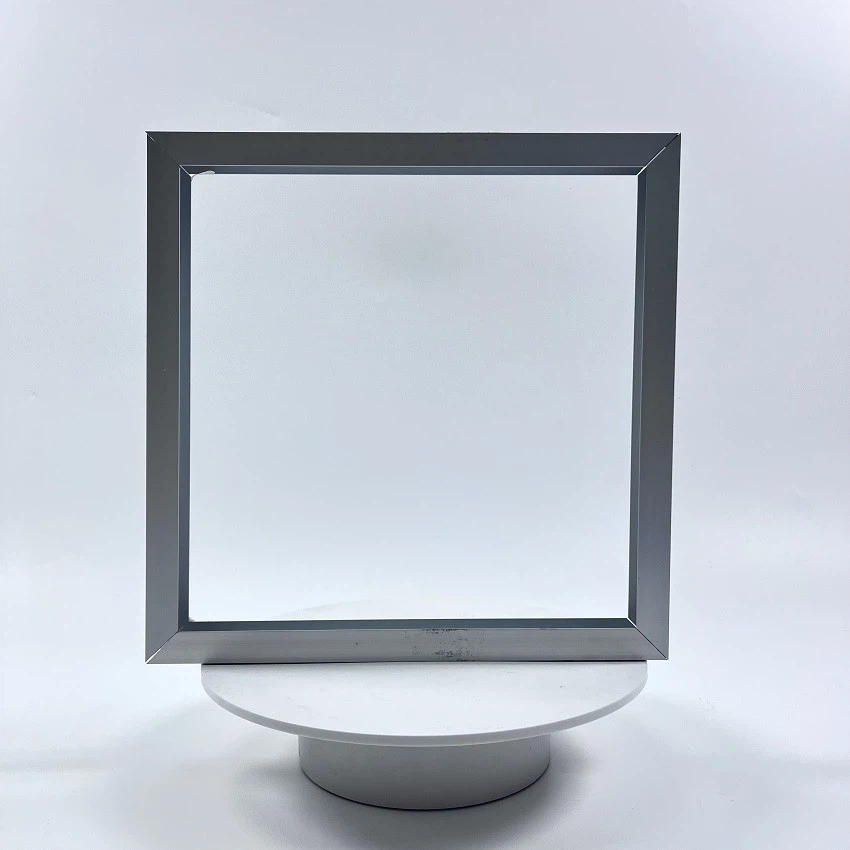
Why the Holding Frame Matters in Real HVAC Systems
A filter can only perform at its rated efficiency when all air is forced to pass through the media.
If the holding frame is not properly designed or fitted:
•part of the air may bypass the filter
•the filter may tilt or shift under airflow
•sealing pressure may be inconsistent
•maintenance teams may struggle with repeatable installation
In practice, these problems often reduce system performance more than the filter material itself.
That is why an HVAC filter frame should be selected based on installation conditions, sealing requirements, and replacement compatibility - not just size alone.

What This Product Is Designed To Do
1. Air Bypass Leakage
When the frame does not provide even contact around the filter edge, unfiltered air can pass through the gaps instead of through the media.
This reduces actual filtration performance and may create misleading system readings, especially when the filter itself is of good quality.
2. Filter Movement During Operation
In higher airflow systems, weak holding structures may allow the filter to vibrate, shift, or sit unevenly in the housing.
Over time, this affects sealing consistency and may cause premature wear at contact points.
3. Uneven Pressure Across the Filter Surface
If the frame does not keep the filter properly aligned, airflow distribution may become uneven.
This can result in:
•localized dust loading
•faster pressure rise in certain areas
•less efficient use of the full media surface
4. Difficult Maintenance and Replacement
In many retrofit projects, the problem is not the filter itself, but the installation frame.
If tolerances are poor or the frame design is inconvenient, maintenance becomes slower and less reliable, especially in systems with frequent filter replacement schedules.
SCommon Problems Caused by Poor Filter Frame Design
1. Air Bypass Leakage
When the frame does not provide even contact around the filter edge, unfiltered air can pass through the gaps instead of through the media.
This reduces actual filtration performance and may create misleading system readings, especially when the filter itself is of good quality.
2. Filter Movement During Operation
In higher airflow systems, weak holding structures may allow the filter to vibrate, shift, or sit unevenly in the housing.
Over time, this affects sealing consistency and may cause premature wear at contact points.
3. Uneven Pressure Across the Filter Surface
If the frame does not keep the filter properly aligned, airflow distribution may become uneven.
This can result in:
•localized dust loading
•faster pressure rise in certain areas
•less efficient use of the full media surface
4. Difficult Maintenance and Replacement
In many retrofit projects, the problem is not the filter itself, but the installation frame.
If tolerances are poor or the frame design is inconvenient, maintenance becomes slower and less reliable, especially in systems with frequent filter replacement schedules.
Why This Is More Than a Simple Accessory
Many low-value product pages treat a frame as a standalone metal part. In real projects, however, the frame affects three critical areas:
Filtration Integrity
If the frame does not support proper sealing, the filter cannot deliver its intended performance.
System Efficiency
Air bypass and poor alignment can reduce overall system efficiency and create unstable airflow behavior.
Maintenance Consistency
For repeated service work, a reliable frame reduces installation errors and improves replacement speed.
This is why experienced buyers often review the frame and the filter as part of one installation system, not as separate unrelated parts.
Technical Considerations Before Ordering
To make sure the correct frame is selected, buyers typically confirm:
•exact outer dimensions
•frame depth and profile type
•material requirement
•installation method
•whether the frame is for new assembly or replacement
•compatible filter type
•sealing or gasket requirements
For retrofit projects, providing an old sample, drawing, or installation photo often helps ensure accurate matching.
Installation Notes
Proper installation is essential for the frame to perform correctly.
Recommended checks include:
•confirm the frame matches the housing opening accurately
•ensure even seating across all contact points
•verify gasket or filter edge contact after installation
•inspect for visible gaps before operation
•make sure the filter remains stable once airflow begins
If the frame is part of a replacement project, the surrounding housing condition should also be checked to avoid fitting issues caused by wear or deformation.
Production Process
Laser Cutting
We use CNC fiber lasers to profile stainless steel furnace air filter frames at ±0.1 mm tolerance, producing clean kerfs and chamfered edges for tight fits. This precision supports OEM furnace filter frame 20×25/16×25 footprints and custom AHU filter holder 592×592 layouts with fast repeatability. Integrated deburring ensures smooth assembly in high-seal applications.
Automated Welding
Robot-guided TIG/MIG welding creates uniform seams between the galvanized/stainless body and aluminum-alloy corners, preserving squareness and flatness for low-leak knife-edge/gel-channel assemblies. The reinforced geometry minimizes bowing at higher ΔP, ideal for retrofit racks and new builds.
Quality Inspection
Every frame undergoes pressure/leak testing up to 1.5 kPa, dimensional audits, and surface smoothness checks; optional powder coat or anodize finishes are qualified for durability and corrosion resistance. Results are logged with ISO 9001 traceability and can ship with CE/UL documentation for compliance.

Structural Features That Buyers Actually Care About
When engineers or procurement teams select a replacement furnace filter frame, they are usually evaluating more than appearance.
Frame Rigidity
The frame should hold its shape during installation and operation, especially in larger-size applications.
Dimensional Accuracy
Proper tolerance is critical for sealing, repeatable installation, and compatibility with existing housings.
Sealing Compatibility
The design should work well with gasket systems or filter edge contact requirements.
Installation Stability
The frame should support secure filter placement without looseness, distortion, or misalignment.
Maintenance Practicality
A well-designed frame reduces handling difficulty during service and replacement.
Packaging & Sealing & Bypass Control
Packing/shipping
For contractor and distributor programs, frames typically ship as:
Export cartons with corner protection
Palletized packing for bulk orders
OEM labeling / barcode / SKU marking (on request)
If the project has mixed sizes, we recommend packing by size group to reduce site sorting time.
Most "dirty coil" complaints are not about filter class. They're about bypass.
Optional sealing features you can specify:
Perimeter gasket (EPDM or silicone options)
Compression fit design matched to your rack/door closure
Retainer/locking features to keep media seated under airflow
What our engineers often see: a perfectly "rated" filter still allows bypass because the rack is uneven or the door doesn't compress the filter consistently. A proper frame with the right sealing approach fixes that.

Maintenance Considerations
Although the frame itself is not a consumable filter media, it should still be inspected during routine service.
Key inspection points include:
•deformation after repeated use
•corrosion in humid or aggressive environments
•looseness at fixing points
•wear at filter contact surfaces
•sealing consistency after filter replacement
A damaged frame can compromise even a high-performance filter, so frame condition should always be included in maintenance planning.
RFQ Template (Copy/Paste)
Send this for a fast quote:
Frame size (W × H) and quantity
Depth target: 21–69 mm / 80 mm / up to 150 mm (engineering-confirmed)
Material: aluminum / GI / stainless
Installation type: slide-in / front-load / fixed mount
Holding method: pad media / insert / cassette
Gasket requirement (EPDM/silicone)
Site environment (coastal humidity, washdown, corrosion risk)
Any OEM needs (label, barcode, packaging)
FAQ
Q: Can frames withstand frequent high-temperature cleaning?
A: Yes – aluminum alloy corners maintain integrity even after 500+ thermal cycles.
Q: Do you provide CAD drawings for custom sizes?
A: We offer free DFM analysis and 3D modeling within 48 hours.
Q: Minimum order quantity (MOQ)?
A: 500 units for standard sizes, 1,000 units for custom designs.
Hot Tags: furnace air filter frame, China furnace air filter frame manufacturers, suppliers, factory


