


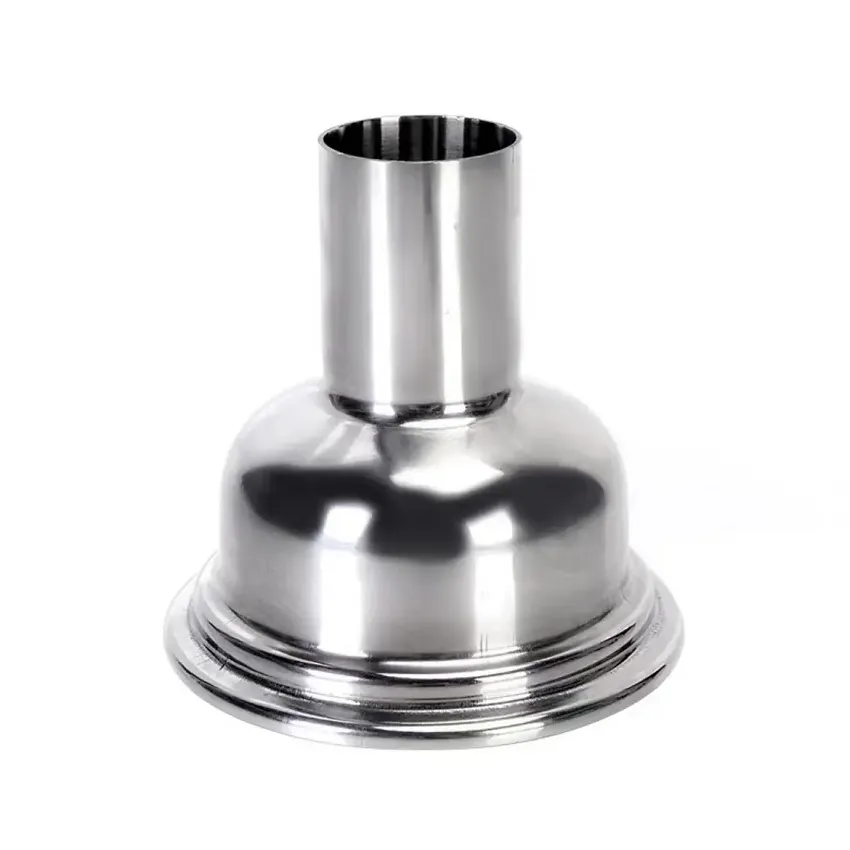


Why Drainage Points Become Hygiene Risks
In hygienic rooms, drainage is often treated as a small construction detail. In actual operation, it is one of the areas most likely to create cleaning difficulty, residue build-up, and odor problems if the design is not right.
A poorly chosen floor drain can create issues such as:
•standing water around the drain area
•residue trapped in hard-to-clean corners
•unpleasant odor returning from the drainage line
•frequent cleaning effort without consistent results
That is why sanitary drainage in cleanroom-related environments is not only about removing water. It is also about making sure the drain is easy to wash, easy to inspect, and less likely to become a hidden contamination point.

What a Sanitary Floor Drain Should Actually Solve
A sanitary floor drain is expected to do more than basic water discharge.
In controlled and hygiene-sensitive spaces, it should help solve four practical problems at the same time:
Efficient Water Removal
The drain should remove washdown water quickly and consistently without leaving pooling around the opening.
Easy Cleaning Access
The structure should allow routine cleaning without creating deep recesses or inaccessible corners.
Reduced Residue Accumulation
A better internal layout helps reduce the chance of dirt, sediment, or product residue remaining inside the drain body.
Odor and Backflow Control
In many applications, controlling unpleasant return odor is just as important as drainage itself.
The value of a sanitary drain comes from how well it handles these daily realities, not just from the material name printed on the specification sheet.
How Drain Structure Affects Cleanability
Two floor drains may look similar from above, but the difference becomes obvious during cleaning and maintenance.
The structure of the drain affects:
•how easily the cover can be removed
•whether debris can be collected and removed quickly
•how many corners need manual cleaning
•whether the internal flow path can be flushed effectively
For this reason, buyers usually pay attention not only to external size, but also to details such as removable grating, internal basket design, trap structure, and surface finish.
A cleaner-looking top cover alone is not enough if the inside remains difficult to inspect.
Vertical vs Horizontal Outlet: When Each Makes Sense
This is one of the most practical decisions in floor drain selection.
Vertical Outlet
A vertical outlet is often preferred when drainage piping runs directly downward below the floor slab.
It is commonly chosen when:
the site layout allows direct downward drainage
fast gravity discharge is preferred
underfloor space is available
Horizontal Outlet
A horizontal outlet is more practical when the drainage line needs to connect laterally.
It is often used when:
pipe routing must run sideways before joining the main line
floor depth is limited
retrofit conditions make vertical discharge less convenient
retrofit conditions make vertical discharge less convenient.
Trap, Odor Seal, and Basket: Why These Details Matter
In many projects, these small details have more impact on daily use than the drain body itself.
Water Trap
A water trap helps block odor and air movement from the drainage pipe. It is useful where odor control is important and regular water flow is sufficient to maintain the seal.
Odor Seal
In some applications, an odor-sealing feature is important even when water flow is not constant. This helps reduce the risk of unpleasant smell returning into the room.
Sediment Basket
A basket is useful where particles, debris, or process residue may enter the drain. It helps simplify routine removal before solids move deeper into the pipe system.
The right configuration depends on the actual washdown pattern, process residue, and maintenance routine. A drain used in a frequently washed room may need a different internal setup from one used in a dry but hygiene-sensitive area.
Where This Type of Drain Is Commonly Used
This type of stainless steel sanitary floor drain is commonly selected for spaces where drainage points must be easy to clean and consistent with hygienic room design.
Typical applications include:
•Pharmaceutical Processing Areas
Where regular washdown, cleanability, and odor control all matter.
•Food and Beverage Processing Rooms
Where residue management and easy cleaning are important for daily sanitation.
•Laboratories and Controlled Utility Areas
Where the drain should support a cleanable and durable room finish.
•Biotechnology and Hygiene-Sensitive Production Zones
Where equipment, flooring, and drainage must all support a cleaner working environment.
The common factor is not the industry label itself, but the need for a drain that fits repeated cleaning and controlled-room use.
What Buyers Should Confirm Before Ordering
For this type of product, selection usually becomes easier when buyers focus on a few practical questions first:
•What is the required top size?
•Is the outlet vertical or horizontal?
•What outlet diameter is needed?
•Is 304 enough, or is 316 / 316L more suitable for the environment?
•Does the application require a water trap, odor seal, or basket?
•What floor thickness or installation depth is available?
•Does the project require flange connection or another installation detail?
These points usually matter more than broad marketing descriptions because they determine whether the drain fits the site and works properly after installation.
Material Selection: 304, 316, or 316L
Material choice should match the cleaning environment, not just the budget.
304 Stainless Steel
Often suitable for general hygienic indoor use where corrosion conditions are moderate.
316 Stainless Steel
A stronger choice where cleaning chemicals or more demanding wet conditions are involved.
316L Stainless Steel
Often preferred where higher corrosion resistance or stricter hygienic expectations are required.
In practice, buyers do not choose material only for appearance. They choose it based on cleaning frequency, chemical exposure, and expected service conditions.
Installation and Cleaning Considerations
A well-designed sanitary drain still depends on correct installation.
During installation, attention is usually given to:
proper level and slope toward the drain
correct outlet alignment with the drainage pipe
even seating of the drain body in the floor
secure sealing around the installation area
After installation, routine cleaning should remain simple. The best-performing drain is usually not the one with the most complex structure, but the one that can be opened, washed, inspected, and returned to service without unnecessary effort.
For many users, this practical ease of maintenance is one of the main reasons to choose a sanitary drain instead of a standard floor drain.
When a Standard Floor Drain Is Not Enough
A standard drain may be acceptable in general utility areas, but it often becomes inadequate when the room must be cleaned frequently or maintained to a higher hygiene standard.
A sanitary floor drain is usually considered when:
•cleaning access matters as much as drainage
•residue retention must be minimized
•odor return needs to be controlled more carefully
•the room is part of a controlled or hygiene-sensitive process
In these conditions, drainage design becomes part of the room hygiene strategy rather than a simple plumbing detail.
Packaging & Logistics
For export supply, packaging should protect the drain body, top cover, and machined edges from deformation or surface damage during transport.
•Typical packing considerations include:
•individual protection for covers and visible surfaces
•separation of components to avoid impact damage
•moisture-resistant outer packaging for long-distance shipment
•reinforced carton or pallet packing for bulk orders
For project deliveries, consistent packing also helps site teams identify sizes and configurations more efficiently during installation.

Why Choose ZOSLONG
At ZOSLONG, we focus on practical products for clean environments and air-side systems. For cleanroom floor drains, our goal is to provide sanitary drainage solutions that are easier to clean, easier to install, and easier to match with real project requirements.
We support:
custom manufacturing
standard and non-standard sizes
material flexibility
project replacement matching
export supply for contractors, distributors, and system integrators
Whether you need a simple hygienic floor drain or a customized stainless steel drain for a controlled production area, we can support your project with practical manufacturing options.

Hot Tags: cleanroom floor drain, China cleanroom floor drain manufacturers, suppliers, factory, High Efficiency Ultra Thin Air Supply Box


